The phenomenon of Living Light, or more accurately the collection of several related processes – bioluminescence, biophosphorescence, and the field my work primarily focuses on – biofluorescence, is one of nature’s more curious tricks. These are living things using biological processes to produce light through various means, either chemical or in response to external stimuli such as specific types of light, and often exhibit hues and vibrancy rarely observed anywhere else in the living world.
Living Light
Per page
View
Evidence
ALCHEMY
Print options available
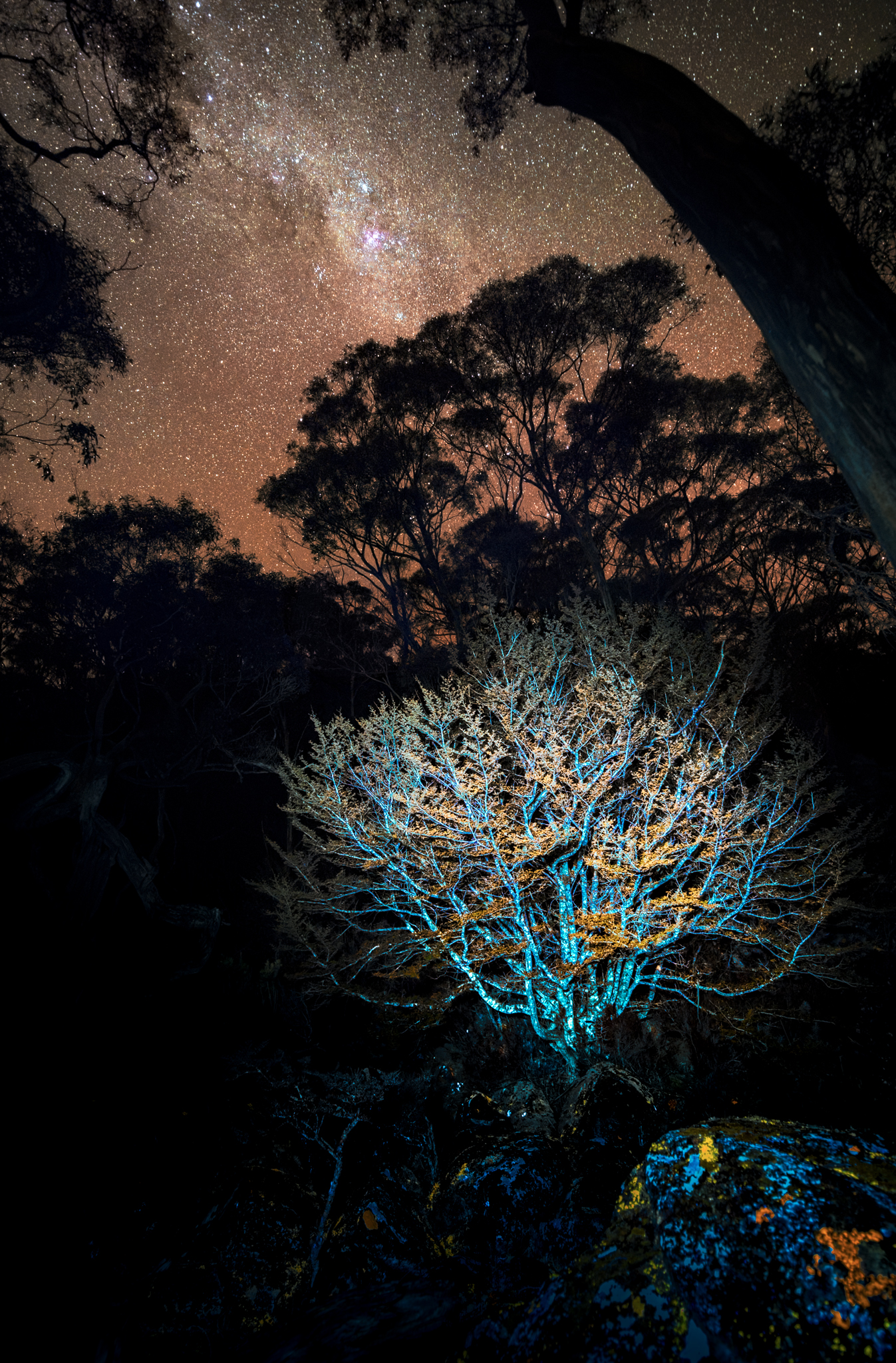
Above, Carina and Crux punctuate the last traces of the Aurora Australis. Below, Australia's only cold-weather deciduous tree, Nothofagus gunnii, reaches its peak golden blaze as winter approaches. Using special lighting, the tree bursts into a brilliant glow - blues, golds, and oranges exploding from the landscape as if by magic.
This image was named the Botanical Photo of the Year in the 2026 Australian Geographic Nature Photographer of the Year.
Apache
Print options available
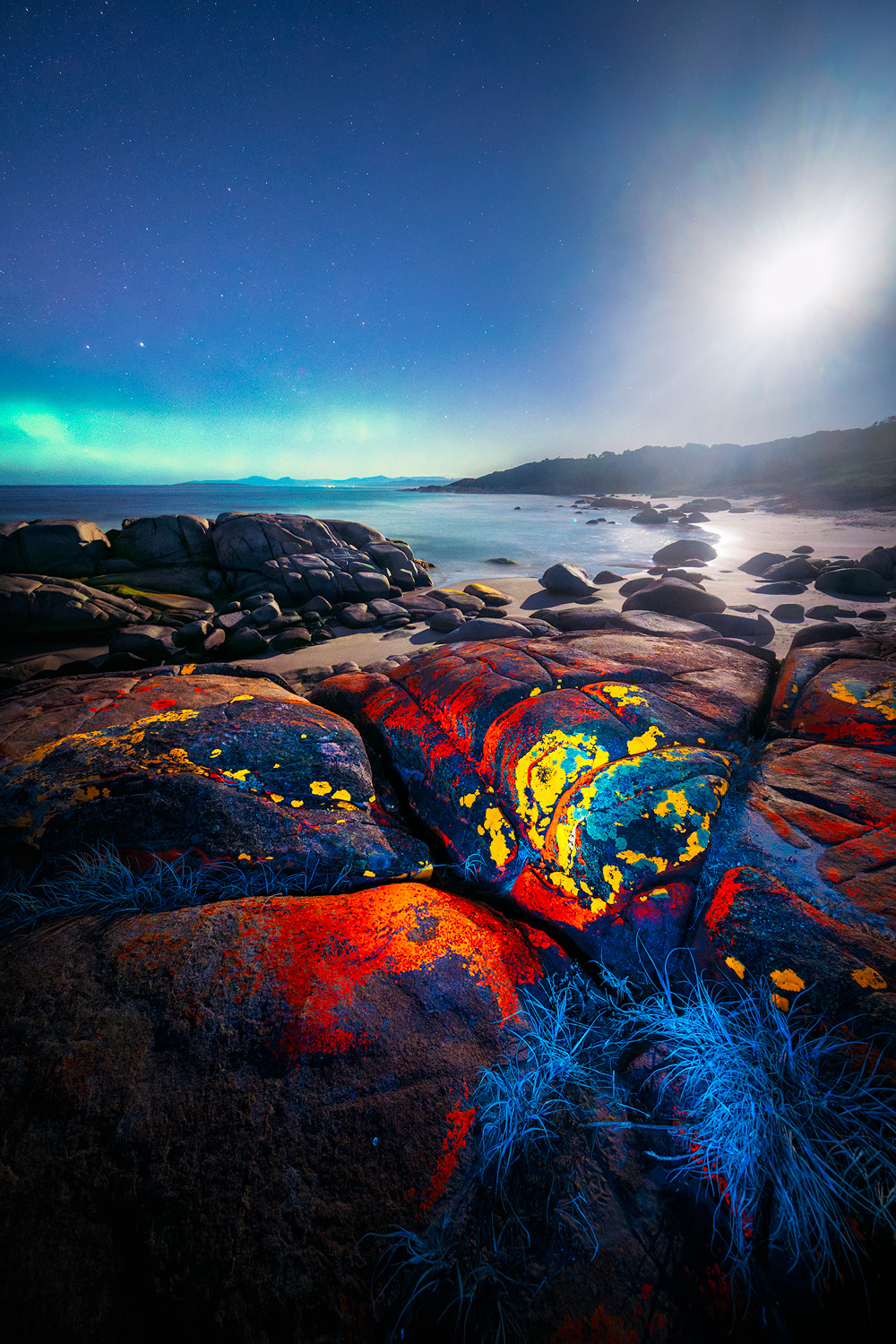
In October 2024, an intense geomagnetic storm impacted earth, triggering significant auroral displays globally despite the tenacious full moon it coincided with.
From the privileged vantage of lutruwita / Tasmania's east coast, an unobstructed view out into the southern Pacific met the swirling colours of the southern lights for hours. While it burned away behind the horizon, a different kind of light emerged from the lichen-encrusted rocks that line the bays of the region, biofluorescence. This living light transforms normally drab browns and russets into a cataclysm of hues across the face of the rocks and grasses, with the moon hanging above the hardscape.
Arachnocampa tasmaniensis And Rising Moon
Print options available
Bettong
Print options available
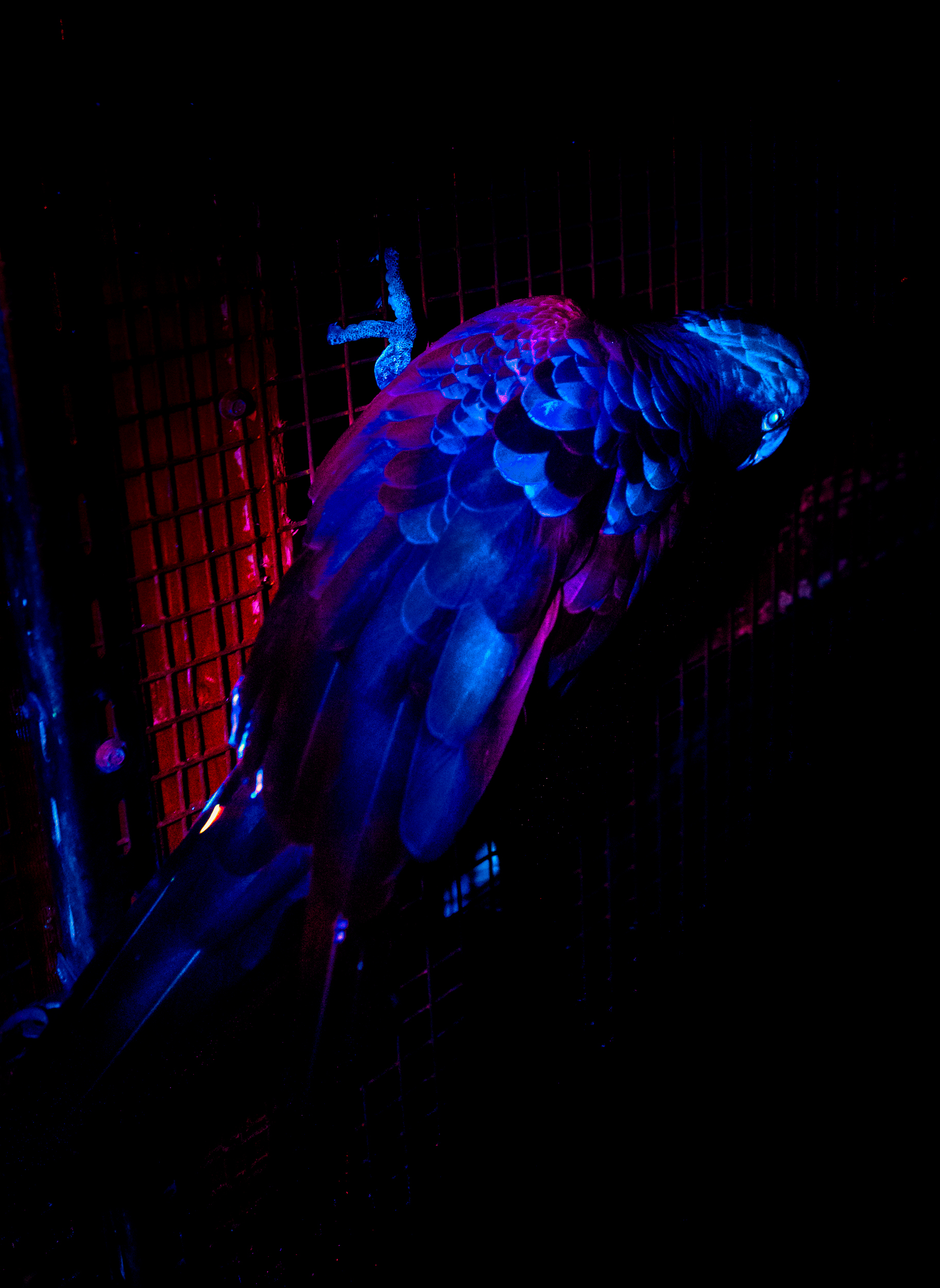
Black Cockatoo
Print options available
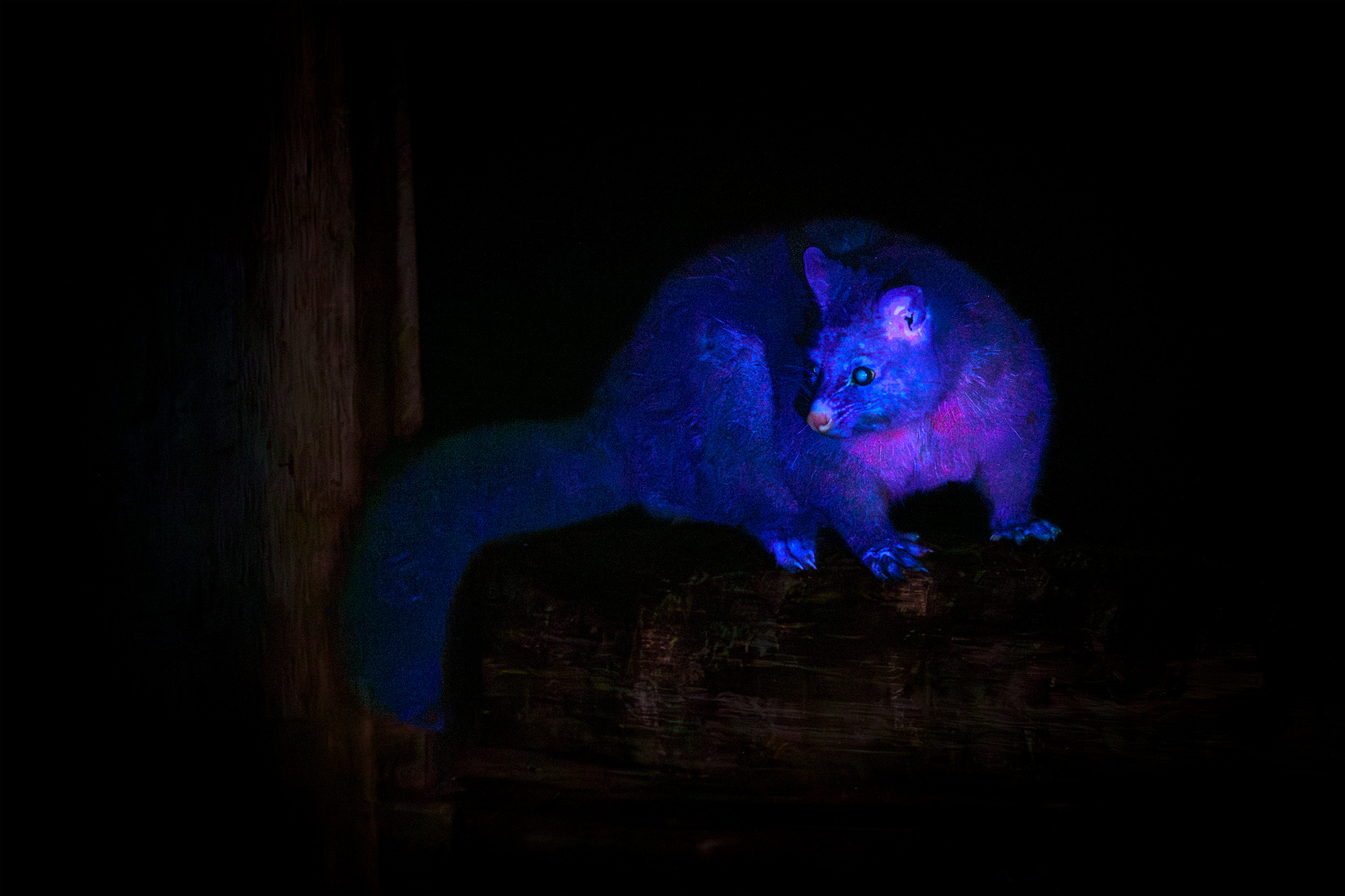
Brushtail Possum I
Print options available
On expedition in Southwest Tasmania during the early stages of 2026, I spent a significant period of time working to codify the biofluoresence of the resident Brushtail Possum population. With a full moon available, it offered a rare opportunity to do this safely – allowing a proper capture of their full range of emission. The vibrant reds hidden amongst the blues are only visible from some angles, adding deeper curiosity to the find.
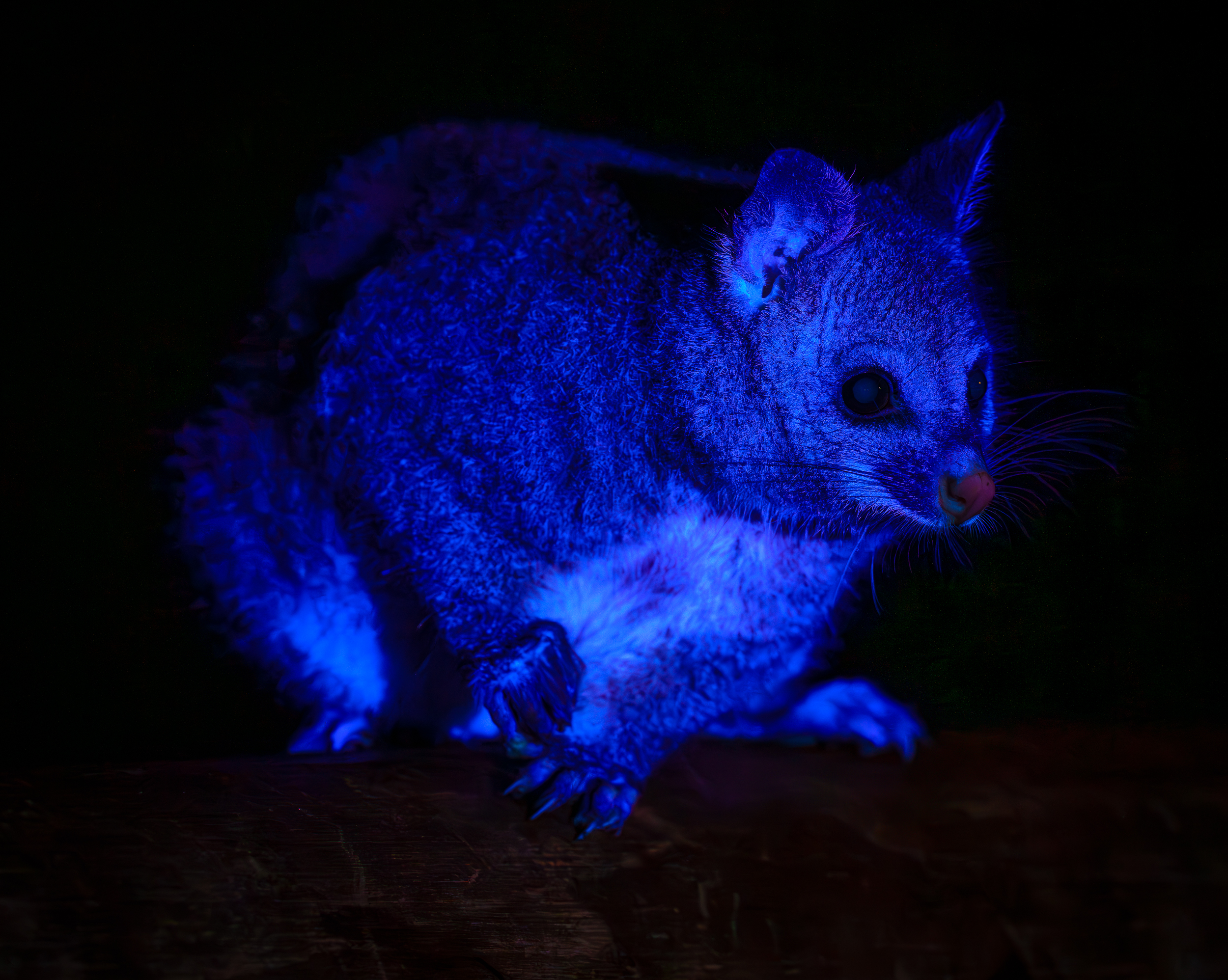
Brushtail Possum II
Print options available
On expedition in Southwest Tasmania during the early stages of 2026, I spent a significant period of time working to codify the biofluoresence of the resident Brushtail Possum population. With a full moon available, it offered a rare opportunity to do this safely – allowing a proper capture of their full range of emission. Under this type of light, the intense pink of the nose bursts forth from the deep blues of their body.
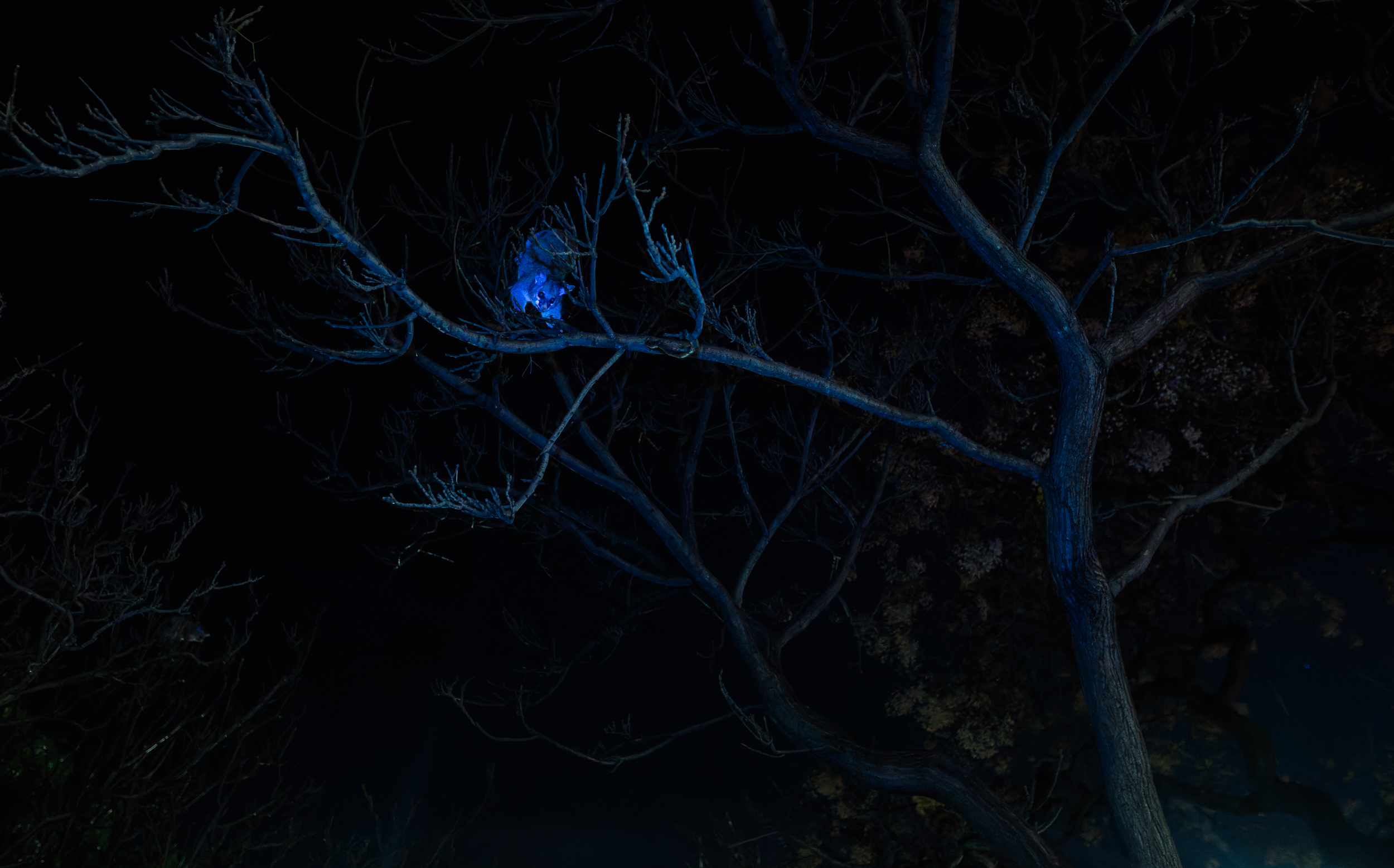
Brushtail Possum III
Print options available
While exploring the city parks around Adelaide during the 2025 Australian Geographic Nature Photographer of the Year exhibition opening, a few of the more curious Brushtail Possum that live in the area came to visit. Being under the intense illumination of the nearby streetlights, their normally effective camouflage is rendered useless. Their biofluorescence explodes out from the dull browns and greys of the trees they inhabit.
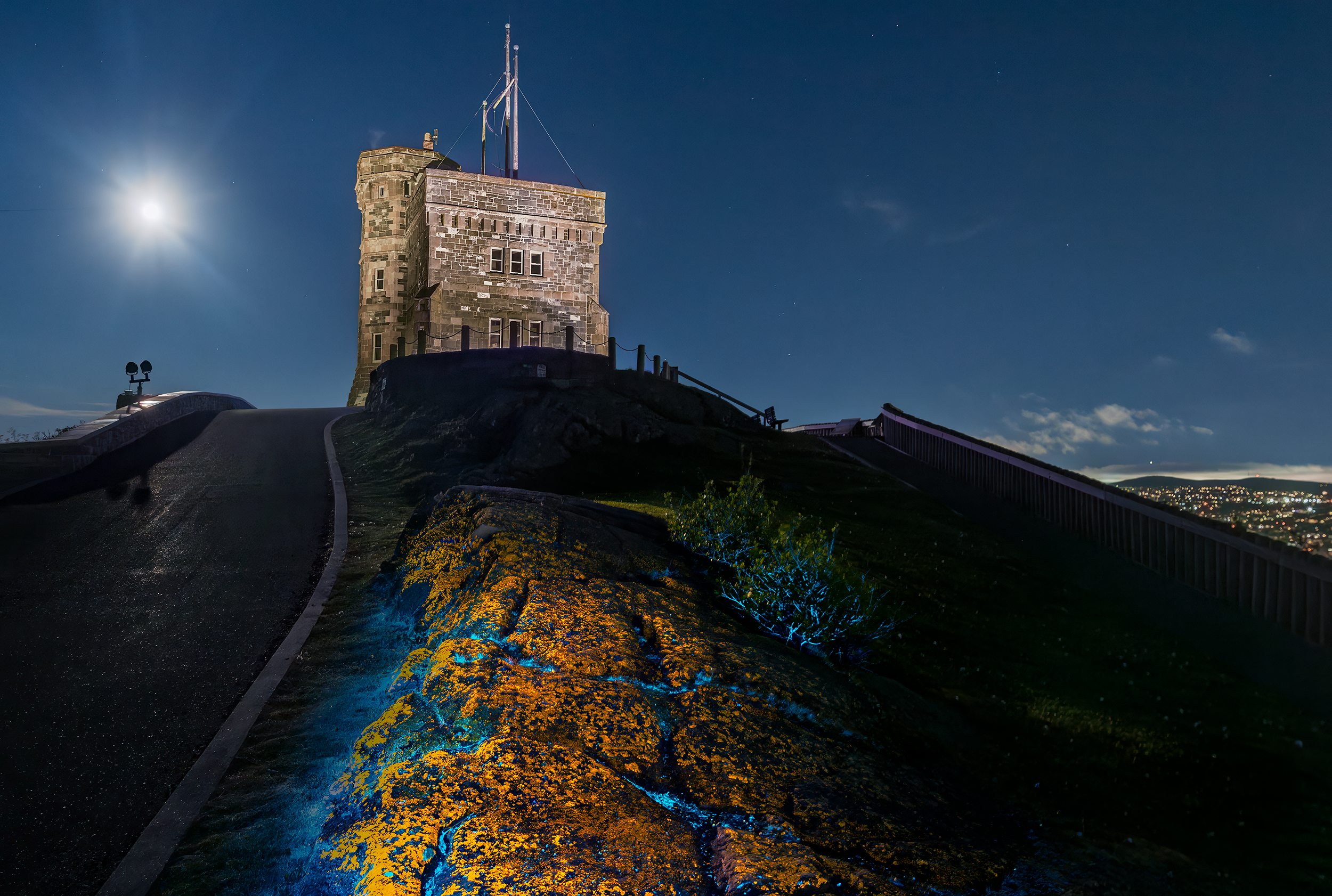
Cabot Tower Under Full Moon
Print options available
Atop Signal Hill in St. John's, Newfoundland and Labrador, Cabot Tower stands as the most prominent feature above the city's harbour. Visible for miles inland – and indeed out to the waiting waters of the North Atlantic, it serves as a beacon of place for the locals. Along its encircling paths, the rocks are covered in tenacious lichens, themselves a beacon of a different kind: biofluoresence. Under the setting Full Moon, they glow vibrantly in oranges, golds, and blues.
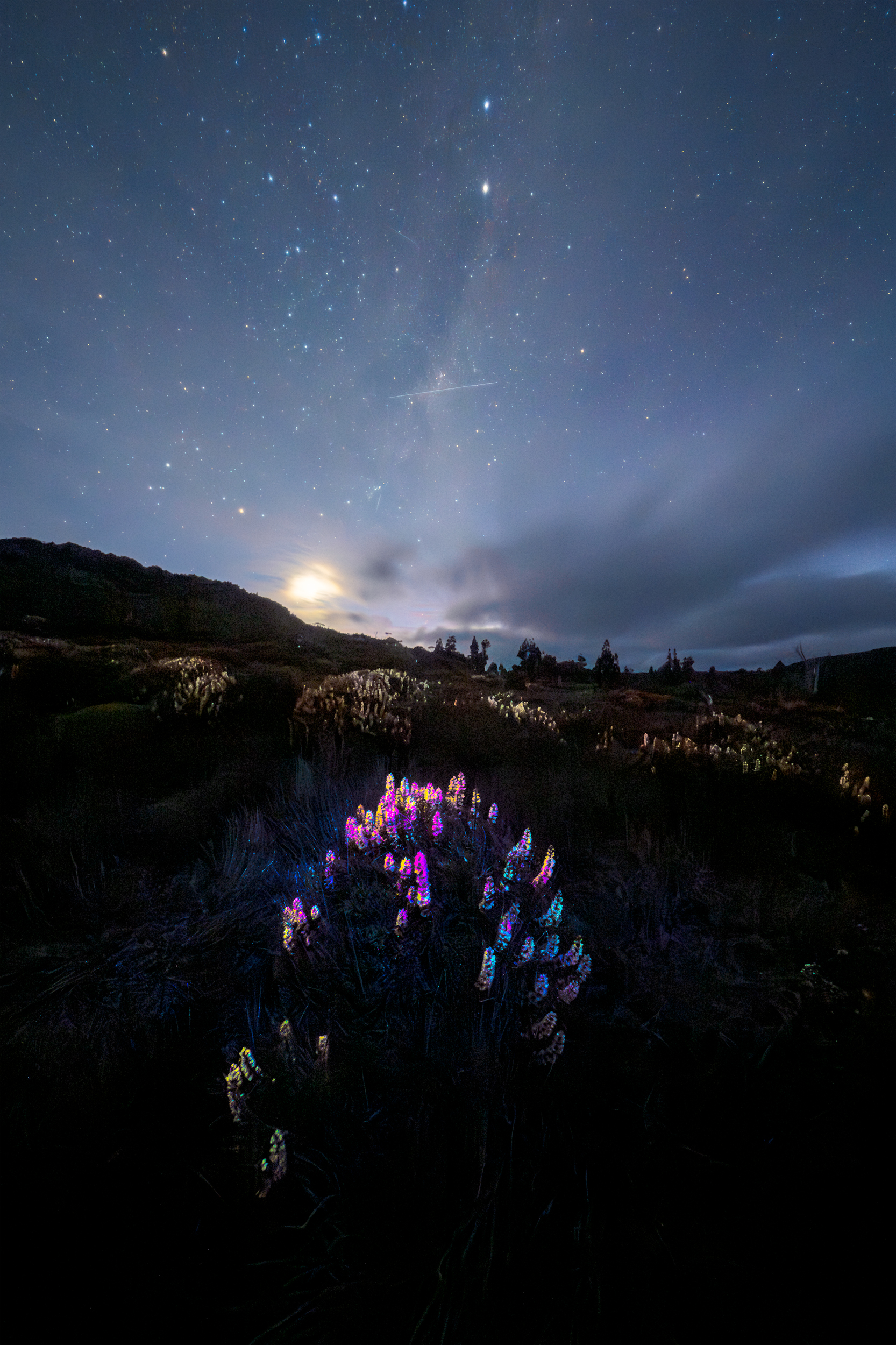
Celestial Bouquet
Print options available
For a brief window over the summer months in lutruwita / Tasmania's alpine plateaus, one of the most iconic species of the regions bursts into flower: Richea scoparia. Colloquially known as simply Scoparia, it occasionally goes by another much less appealing name -- Bushwalker's Nightmare.
With sharp, stiff blades set behind the ephemeral bloom, most of the year it lays in wait to slice unsuspecting ankles as they brush past. Here, under a rising partial moon and the first traces of Milky Way for the year, it fluoresces brightly in a range of colours under multispectral light.
Centipede Party
Print options available
Cod Tongue
Print options available